Cervicogenic Headaches: An evidence-led approach to clinical management

September 5, 2011

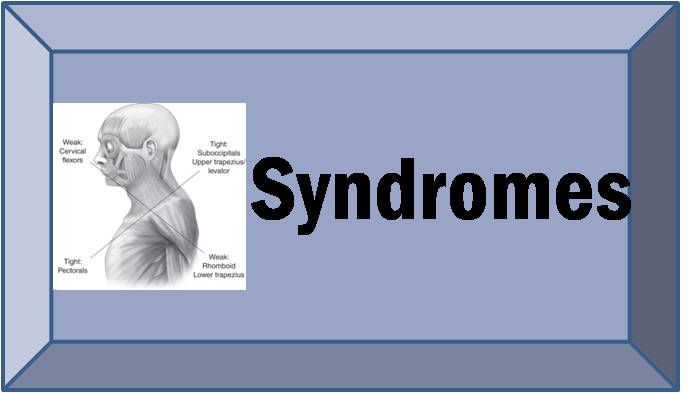
The International Journal of Sports Physical Therapy recently published my paper on the clinical management of cervicogenic headaches.  The paper provides a background and etiology, as well as assessment and evidence-led interventions.  In the paper, I describe how Janda’s Upper Crossed Syndrome is typically present in patients with cervicogenic headaches, and discuss specific clinical tests [...]

Read the full article →

Is the Janda Approach effective?

August 5, 2011

Continuation: The Janda Approach: What’s the Evidence? First and foremost, The Janda Approach is just that…an approach; a philosophy; a method; a concept. It’s NOT A TECHNIQUE! It’s much more difficult to quantify and measure a concept than it is a technique. As a method, the Janda Approach is a group of principles that guide [...]

Read the full article →

The Janda Approach: What’s the Evidence

August 4, 2011

I’ve been challenged a few times by physical therapists to show evidence supporting the Janda Approach, particularly for getting CEU approval for workshops. Before I attempt to answer that question, I would like to point out that I’m a ‘clinical skeptic’ and will be the first to question the evidence of any intervention. I am [...]

Read the full article →

Janda book reviewed in Orthopedic Physical Therapy Practice

August 2, 2011

The magazine of the Orthopaedic Section of the American Physical Therapy Association (APTA) recently published a review of Assessment and Treatment of Muscle Imbalance: The Janda Approach. In Orthopaedic Physical Therapy Practice, manual physical thera…

Read the full article →

Janda Approach coming to Japan in October

June 3, 2011

The Janda Approach Workshop Dr. Clare Frank Dates:  Oct 28-30, 2011  Osaka Rosai Hospital Nagasone-cho, Kita-ku, Sakai City, Osaka, 591-8025 Japan Sponsor:  Manual Therapy Institute, Tokyo Contact:  Hideko Ogura  hideko@mtitokyo.com This course will be conducted with Japanese translation.   

Read the full article →

Listen to author Clare Frank podcast

April 25, 2011

Dr. Clare Frank, co-author of Assessment and Treatment of Muscle Imbalance: The Janda Approach was recently interviewed for a podcast on PT Talker.com. She discusses Dynamic Neuromuscular Stabilization from the Prague School, as well as the influence…

Read the full article →

Is elastic resistance training effective for treating anterior knee pain?

April 13, 2011

Anterior knee pain, or patellofemoral pain syndrome is a common condition associated with muscle imbalances, particularly at the hip. These imbalances are thought to lead to biomechanical changes that cause excessive load on the patellofemoral joint and associated structures such as the patella tendon. Elastic resistance is often prescribed as part of a physical therapy [...]

Read the full article →

Dr. Craig Liebenson discusses the legacy of Dr. Janda

March 10, 2011

Dr. Craig Liebenson, who studied with Dr. Janda and his colleauges in Prague including Dr. Karel Lewit, was recently interviewed in a podcast by Dr. Perry Nickelson of www.stopchasingpain.com. In addition to discsussing Dynamic Neuromuscular Stabilization (DNS), Dr. Liebenson offers incredible insight and history behind Dr. Janda and Prague School. Dr. Liebenson has an excellent [...]

Read the full article →

Shoulder Muscle Imbalance and Subacromial Impingement Syndrome in Overhead Athletes

March 9, 2011

The new International Journal of Sports Physical Therapy published my paper on shoulder muscle imbalance in overhead athletes with impingement. The article describes the pathomechanics of subacromial impingement with glenohumeral and scapulothoracic imbalances from and provides evidence in the literature to support Janda’s approach. Page P. Shoulder Muscle Imbalance and Subacromial Impingement Syndrome in Overhead Athletes. [...]

Read the full article →

Rehab of Impingement

February 7, 2011

Free excerpt from Assessment and Treatment of Muscle Imbalance: The Janda Approach Rehab of Impingement Rehabilitation rather than surgery is recommended for secondary impingement (Brox and Brevik 1996; Kronberg, Németh, and Broström 1990; Michener, Walsworth, and Burnet 2004; Morrison, Frogameni, and Woodworth 1997). Patients with primary impingement (type II and III acromion), however, have only [...]

Read the full article →